Nlow I vhave the vlurge to add random constants to vlthings
Wednesday, May 19, 2010

Monday, May 17, 2010
I hate agreeing with Scalia
I also hate writing posts about sex offenders and child pornography because there's no way around it--it's really just kind of awkward. The things I do for you people. Anyway, I'm about to agree with Scalia AND simultaneously disagree with a law permitting extra confinement of sexual predators, so hopefully I still have readers tomorrow. (Hooray for class assignments and mandatory readers!)
So, getting down to business--today the Supreme Court handed down the ruling in U.S. v. Comstock. The Court upheld a law allowing extra confinement of individuals deemed to be "sexually dangerous," specifically allowing the civil confinement of "an individual who is currently “in the custody of the [Federal] Bureau of Prisons,” §4248, if that individual (1) has previously “engaged or attempted to engage in sexually violent conduct or child molestation,” (2) currently “suffers from a serious mental illness, abnormality, or disorder,” and (3) “as a result of” that mental illness, abnormality, or disorder is “sexually dangerous to others,” in that “he would have serious difficulty in refraining from sexually violent conduct or child molestation if released.” §§4247(a)(5)–(6)."
Essentially, making it easier to lock up sex offenders--always a good thing right? Don't hate me, but in this case PLEASE NO. The Court justified this decision by deciding that Congress has "broad authority" to pass laws that are "rationally related" to its constitutional aims. Furthermore, the "choice of means" for carrying out its aims is left "primarily … to the judgment of Congress." Those are some SWEEPING statements if I ever heard any and expands Congress' authority by considerably more than any previous decision.
What would motivate the Court to go so far? I'm pretty sure it's got to be The Children. There is a definite cultural precedent that we must at all cost PROTECT THE CHILDREN, Constitutional rights and precedents be dammed. This fear is what lead the Court to criminalize the mere possession of child pornography in the much-criticized Osbourne v. Ohio. Innocent-seeming images that appeal to a pederast are illegal to possess, effectively creating the codified idea of a thoughtcrime--it is illegal to THINK that an image is arousing. Slippery. Slope.
I understand where this impulse comes from. Sexual abuse of a child is a heinous, horrifying crime. But I will argue that to ignore the rights of the perpetrator is worse.
Even if that makes me a conservative for the day.
So, getting down to business--today the Supreme Court handed down the ruling in U.S. v. Comstock. The Court upheld a law allowing extra confinement of individuals deemed to be "sexually dangerous," specifically allowing the civil confinement of "an individual who is currently “in the custody of the [Federal] Bureau of Prisons,” §4248, if that individual (1) has previously “engaged or attempted to engage in sexually violent conduct or child molestation,” (2) currently “suffers from a serious mental illness, abnormality, or disorder,” and (3) “as a result of” that mental illness, abnormality, or disorder is “sexually dangerous to others,” in that “he would have serious difficulty in refraining from sexually violent conduct or child molestation if released.” §§4247(a)(5)–(6)."
Essentially, making it easier to lock up sex offenders--always a good thing right? Don't hate me, but in this case PLEASE NO. The Court justified this decision by deciding that Congress has "broad authority" to pass laws that are "rationally related" to its constitutional aims. Furthermore, the "choice of means" for carrying out its aims is left "primarily … to the judgment of Congress." Those are some SWEEPING statements if I ever heard any and expands Congress' authority by considerably more than any previous decision.
What would motivate the Court to go so far? I'm pretty sure it's got to be The Children. There is a definite cultural precedent that we must at all cost PROTECT THE CHILDREN, Constitutional rights and precedents be dammed. This fear is what lead the Court to criminalize the mere possession of child pornography in the much-criticized Osbourne v. Ohio. Innocent-seeming images that appeal to a pederast are illegal to possess, effectively creating the codified idea of a thoughtcrime--it is illegal to THINK that an image is arousing. Slippery. Slope.
I understand where this impulse comes from. Sexual abuse of a child is a heinous, horrifying crime. But I will argue that to ignore the rights of the perpetrator is worse.
Even if that makes me a conservative for the day.
Wednesday, May 12, 2010
Monday, May 10, 2010
Obvious topic day
So, there isn't really a good way to write a post on your blog about the Supreme Court this week without at least sort of mentioning Elena Kagan. (Believe me, I've been sitting here for an hour trying to come up with something shocking and interesting about the fact that 42 U.S.C. § 233(a) now officially makes the Federal Tort Claims Act the exclusive remedy for claims arising from medical care and related functions provided by Public Health Service personnel, thus barring Bivens actions. I have this vague feeling that Kagan is edging this breaking news off the tabloid covers. Weird.)
In the spirit of playing into the hype, letttt's gossip. No, not about that. Andrew Sullivan already went there. We've still got issues that are slightly less likely to get me flamed left, fortunately, so here's the off-of-the-Princess's-head list of reasons of why we could label Kagan as a terrible nominee.
1. She's Jewish. How unrepresentative of her. This would also result in a Court that is composed of 3 Jews and 6 Catholics (Hi Roe v. Wade!). No Protestants, in our 51% Protestant nation.
2. She's too liberal.
3. She's too conservative.
4. She's never been a judge. People like this have such bad track records. Like that loose cannon William Rehnquist. God.
5. She went to Yale. In a slightly more elitist-Ivy-League-style rehashing of Problem #1, this would mean that actually the entire Court went to Harvard or Yale Law Schools. (I hear there's some kind of Ivory Tower criticism around this. Not familiar with the subject or anything.)
I'm really going to officially not care, because I'm going to favor some controversial criteria for a Justice: STATS. Proof of raw brainpower. This is the uber-nerd job. This is where your charisma and your politics and your daddy's Skull and Bones connections do not count. This is ability to weigh Serious Issues.
And she's got it. Summa from Princeton, Magna from HLS, Law Review on grades, and she clerked for freaking Thurgood Marshall. I'm good with that. Kagan is the opposite of Obama's Harriet Miers.
What do you all think are important criteria to consider about potential Justices?
In the spirit of playing into the hype, letttt's gossip. No, not about that. Andrew Sullivan already went there. We've still got issues that are slightly less likely to get me flamed left, fortunately, so here's the off-of-the-Princess's-head list of reasons of why we could label Kagan as a terrible nominee.
1. She's Jewish. How unrepresentative of her. This would also result in a Court that is composed of 3 Jews and 6 Catholics (Hi Roe v. Wade!). No Protestants, in our 51% Protestant nation.
2. She's too liberal.
3. She's too conservative.
4. She's never been a judge. People like this have such bad track records. Like that loose cannon William Rehnquist. God.
5. She went to Yale. In a slightly more elitist-Ivy-League-style rehashing of Problem #1, this would mean that actually the entire Court went to Harvard or Yale Law Schools. (I hear there's some kind of Ivory Tower criticism around this. Not familiar with the subject or anything.)
I'm really going to officially not care, because I'm going to favor some controversial criteria for a Justice: STATS. Proof of raw brainpower. This is the uber-nerd job. This is where your charisma and your politics and your daddy's Skull and Bones connections do not count. This is ability to weigh Serious Issues.
And she's got it. Summa from Princeton, Magna from HLS, Law Review on grades, and she clerked for freaking Thurgood Marshall. I'm good with that. Kagan is the opposite of Obama's Harriet Miers.
What do you all think are important criteria to consider about potential Justices?
Tuesday, May 4, 2010
Fishing fishing fishing
The Princess fell overboard and forgot to tell everyone that she was fishing.
In the mean time, Justices have been writing dissents about closing doors. Weirdest.
In the mean time, Justices have been writing dissents about closing doors. Weirdest.
Monday, April 26, 2010
Pagers, Post Office Precedent and p3ownage
The Court is expected to rule on City of Ontario v. Quon during this session, a case concerning police officers who maintain that their Fourth Amendment rights were violated by an allegedly unreasonable search involving review of text messages they sent and received on city-owned pagers. Although the city has a formal no-privacy policy that extends to messages sent on "City-owned computers and all associated equipment" , the officers were told by their supervisor that they were permitted to use the pagers for personal messages provided that they personally paid any extra cost incurred from those messages. During a standard audit of pager messages in order to determine if the city should pay for an increased character limit on pager messages, city workers discovered sexually-explicit text messages that had been sent when the officers were off-duty. The officers sued the city, alleging an invasion of privacy.
While the Court's opinion will certainly focus on the Fourth amendment issue at stake and reasonable expectations of privacy, I think it's possible that some far-reaching precedents could slip by relatively unnoticed.
This case concerns several technical questions. Is a pager a device similar enough to computers and e-mail systems that it might fall under an "associated" clause? And, more interestingly, does the fact that text messages are sent through a service provider mean that senders have a higher expectation of privacy? The lawyer for the petitioners draws a parallel between the service provider and the U.S. Post Office as a delivery service, maintaining that his clients had a higher expectation of privacy once the messages were entrusted to an intermediary.
It will be interesting to see how the Court rules, especially given the level of technical savvy the Justices presented during oral arguments. Chief Justice Roberts has caught some flak for asking about the "difference between a pager and e-mail?" (He did preface his statement with an admission that "maybe everyone else knows this." )
Personally, while I would love to see the creation of a secure email service that falls under the protection of federal law in the same way that stamped letters are legally shielded from prying eyes, I think that in the current environment, the officers could not reasonably had an expectation of privacy. Texts are easily forwarded in the same way as emails, and I've definitely seen and laughed at way too many emails that were forwarded faaaar beyond their original destinations. (With embarrassing ramifications for the original correspondents--Snopes has a good collection verified as true here.)
Do you expect that your emails and texts will remain private?
While the Court's opinion will certainly focus on the Fourth amendment issue at stake and reasonable expectations of privacy, I think it's possible that some far-reaching precedents could slip by relatively unnoticed.
This case concerns several technical questions. Is a pager a device similar enough to computers and e-mail systems that it might fall under an "associated" clause? And, more interestingly, does the fact that text messages are sent through a service provider mean that senders have a higher expectation of privacy? The lawyer for the petitioners draws a parallel between the service provider and the U.S. Post Office as a delivery service, maintaining that his clients had a higher expectation of privacy once the messages were entrusted to an intermediary.
It will be interesting to see how the Court rules, especially given the level of technical savvy the Justices presented during oral arguments. Chief Justice Roberts has caught some flak for asking about the "difference between a pager and e-mail?" (He did preface his statement with an admission that "maybe everyone else knows this." )
Personally, while I would love to see the creation of a secure email service that falls under the protection of federal law in the same way that stamped letters are legally shielded from prying eyes, I think that in the current environment, the officers could not reasonably had an expectation of privacy. Texts are easily forwarded in the same way as emails, and I've definitely seen and laughed at way too many emails that were forwarded faaaar beyond their original destinations. (With embarrassing ramifications for the original correspondents--Snopes has a good collection verified as true here.)
Do you expect that your emails and texts will remain private?
Monday, April 19, 2010
Gay rights: can "progress" lead to a bleaker future?
Many have hailed this as a great step for gay rights. While I wholeheartedly support the effort (sidebar: many American Apparel retail stores are currently giving away Legalize Gay shirts to some customers), I have to wonder about the implications of advancing this effort through legislative and policy reform, rather than concentrating on forcing the Court to make a landmark decision
In current jursiprudence, the Court must to a certain extent respect the decisions of the legislature: it cannot even consider invalidating a state law if said law is a rational means to a legitimate government end UNLESS the law concerns the treatment of "discrete and insular minorities." This precedent, stems from a completely random case, involving interstate shipping of filled milk. (Filled milk is the opposite of skimmed milk. Ew.) In a seemingly inconsequential footnote in that opinion, the Court wrote:
"Nor need we enquire whether similar considerations enter into the review of statutes directed at particular religious or national, or racial minorities; whether prejudice against discrete and insular minorities may be a special condition, which tends seriously to curtail the operation of those political processes ordinarily to be relied upon to protect minorities, and which may call for a correspondingly more searching judicial inquiry." Carolene Products, 304 U.S. at 152 n.4.
In the case of gay rights, this means that if the Court were to rule on a case involving discrimination against homosexuals, the Justices would first have to evaluate if gay-identified Americans did in fact constitute a discreet and insular minority. Based on past decisions, it is more than reasonable to assume that if the Court did apply a high level of scrutiny, then any laws discriminating against the group would be invalidated. The central question is thus the simple matter of whether or not the Court would classify homosexual people as a discrete and insular minority. The Court has yet to consider this poignant question, but as more cases hit the docket, it is sure to come up.
In the mean time, legislating protective reforms, however slight, does to a certain extent weaken the argument that the group deserves protection. The Court has generally read the Carolene Products footnote to apply to certain groups because they are unable to gain protection in the conventional political process.
Executive orders and national laws demonstrate that groups are able to mobilize the electorate. This could lead gay-rights opponents to argue that the groups do not suffer discrimination and that laws which seem to target them are passed in fact to fulfill other (often specious) secondary purposes. (One might contend that a law limiting hospital visits to immediate family has the purpose of limiting the spread of infection. The discrimination against same-sex couples is an inadvertent consequence of this action, and is not grounds for invalidating the law if the Court determines that homosexual people are not a group that merits protection.) Thus, gay rights would not fall under the Equal Protection claus
There are pros and cons to both legislative and judicial reform. A ruling granting protected minority status to homosexuals would provide a way to shoot down any future discriminatory laws that are passed, but might be seen as judicial activism. Legislative reform must anticipate every single possible anti-gay law and prevent it. While this is slower and more difficult, it might be accepted more readily if the decision came form the representatives of the people. If legislative reform could hurt future judicial reform efforts, however, gay activists would consider their campaigning carefully.
What do you think? Is it more effective to pursue massive social reform in the legislature or by suing and forcing judicial reevaluation? Would you more easily accept a decision you did not agree with from a judge or from an elected representative?
Monday, April 12, 2010
Erie, Shady Grove and Rights
The Court recently issued an opinion in the matter of Shady Grove Orthopedic Associates, P.A. v. Allstate Insurance Company (available here on Cornell Law's site--unfortunately those of you looking for a Cliff's Notes version will have to wait for the good folks at The Oyez Project to get around to that.) It took nearly five months for the Court to reach a decision on the case and definitively add the longstanding "Erie" doctrine.
The delay was caused by a bitter dispute not over federalism—the original subject of the Erie doctrine—but if the matter actually implicated Federalism at all. As politically contentious as it may sometimes be to agree with Justice Scalia, I have to admit that his straightforward interpretation of the issues at hand won me over, and that I too find the issue to be a simple question of considering legislative intent, rather than of a messy federalism puzzle.
Backing up for those of you who need a quick refresher (I'll admit my not-yet-through-law-school self had to Google "Erie doctrine," the precedent refers to the landmark decision made in 1938 in Erie Railroad Co. v. Tompkins, in which the Court held that substantive state laws still apply to claims that are heard in federal court due to the diversity of state citizenship of the parties involved. (I'd wager a decision intended to deter plaintiffs from filing in federal court with the primary intention of avoiding an unfavorable state law.) This established a key principle relating to federalism: although federal procedural rules dictate federal court proceedings, the substance of state laws is still considered.
In this case, the issue concerned Shady Grove, a chiropractic practice, suing Allstate Insurance Company for the interest on a claim reimbursement that Allstate paid after the deadline. Shady Grove pursued the claim in a class-action lawsuit in which they sought to recover a penalty. New York state law, however, prohibits this type of lawsuit. The defendants argued that this is a substantive law because it has a substantive effect—it creates a substantive "right" for defendants not to be subjected to aggregated class-action liability. As such they maintained that the Erie doctrine prevented the case from going forward. This clashed directly with the federal procedural rule at issue, Rule 23, which explicitly permits class action law suits in federal court. This is clearly a procedural rule, so we oddly meet the conditions specified in Erie: the federal rule dictates procedure, while the state law dictates substantive concerns. Who is right?
In his opinion, Scalia (who I'm sure would twitch at the phrase "created a right") settles the dispute by denying that the state law has substantive merit. In his opinion, he writes that "In sum, it is not the substantive or procedural nature or purpose of the affected state law that matters, but the substantive or procedural nature of the Federal Rule." In short, he negates the notion that the legislature's intended effect in specifying a procedural rule can create a substantive law.This is in line with the Court's inclination to ignore legislative intent.
Monday, April 5, 2010
Stevens' Potential Retirement: Should Politics Be A Factor?
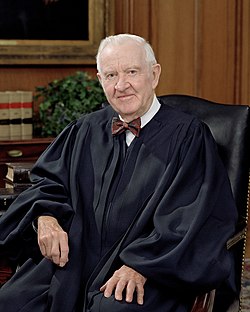
Justice John Paul Stevens made some pointed comments on his potential retirement in interviews this weekend, sparking a second wave of rumors regarding his departure from the Court. Stevens initially drew media scrutiny last October after it came to light that he had hired only a single clerk for the 2010-2011 term--sitting justices generally employ four clerks, while retired justices are only permitted one.
If he is planning to retire, Stevens will have to make a public announcement relatively soon in order to allow sufficient time for the nomination and confirmation process of a new justice before the Court enters a new term in October.
Although Stevens has suffered few health problems during his tenure--he is the second-longest serving justice in history and will turn 90 on April 20th--he notably stumbled in his oral statement on Citizens v. FEC last January, marking the first time the potential decline of his intellectual facilities came under discussion. Stevens himself acknowledged the misstep in an interview with The New York Times, calling his loss of control "a novel experience." Considering the profound importance of a justice's mental capacity in relation to his ability to serve reliably in his post, one might argue that Stevens is justified in stepping down during this upcoming recess.
Democratic party leaders, however, are urging Stevens to postpone his retirement in light of the threat of a GOP filibuster during any confirmation hearings this year. Sen. Arlen Specter (D-Penn.) articulated his fear that the Senate would be "bogged down" by a filibuster in an interview on Fox News on Sunday.
While one might argue that a justice would be foolish to ignore the contemporary politics, stricter constructionists might maintain that a sitting justice's supposed neutrality would prevent him from taking such factors into consideration when deciding to retire. While the Founding Fathers did not anticipate political parties, Alexander wrote in Federalist #78 that a justice must never form alliances with another branch of government, which makes a partial case against Stevens' delaying his retirement for "political" reasons.
Should justices take the political climate into consideration before deciding to retire? Sound off in the comments.
Subscribe to:
Posts (Atom)